What are the main types of digital marketing? Digital marketing uses online channels and tactics to promote a product, service, or brand. Its main types include SEO, pay-per-click advertising, social media, content, email, affiliate, influencer, and mobile marketing.
Choosing a channel starts with a clear goal, such as awareness, lead generation, or retention, and a defined audience. SEO can build organic visibility over time, while PPC can support short-term goals with measurable results. Use customer data to segment audiences and personalize messages, and coordinate channels so that social media, content, SEO, and paid ads support the same business objectives.
The main types of digital marketing
Digital marketing is a broad field, consisting of multiple channels and tactics used to promote a product, service, or brand online. Below are the main types of digital marketing every business should be aware of:
1. Search engine optimization (SEO)
SEO is the process of optimizing your website content so that it ranks higher on search engine result pages (SERPs). By using targeted keywords, quality backlinks, and on-page optimization, SEO helps improve visibility and organic traffic. As part of a comprehensive strategy, it supports the importance of digital marketing in generating long-term, sustainable growth.
2. Pay-per-click advertising (PPC)
PPC involves paying for advertising placements, typically through platforms like Google Ads or Bing Ads. Businesses bid on keywords, and ads appear to users who search those terms. A paid marketing campaign delivers quick results and measurable ROI, making it suitable for short-term objectives.
Start driving conversions today with a powerful paid marketing campaign.
3. Social media marketing
Social media marketing focuses on promoting content and engaging with audiences across platforms like Facebook, Instagram, LinkedIn, and X (formerly Twitter). It helps businesses increase brand awareness, build relationships, and drive web traffic. This channel is particularly effective for creating viral content and interacting directly with customers. For hands-on help, see our community management services in Dubai.
Boost your online presence and connect with your audience through expert social media marketing strategies.
4. Content marketing
Content marketing revolves around creating valuable, relevant content to attract and retain customers. This includes blog posts, videos, infographics, whitepapers, and more. It’s crucial for building authority and trust, especially when paired with SEO.
5. Email marketing
Email remains one of the most effective digital channels. By segmenting your audience and personalizing messages, businesses can achieve high engagement and conversion rates. Email marketing is essential for nurturing leads and retaining existing customers. We cover this in more depth in our guide to digital marketing strategies.
6. Affiliate marketing
Affiliate marketing is performance-based, where businesses reward affiliates for each visitor or customer brought by the affiliate’s own efforts. This model helps expand reach and encourages word-of-mouth marketing.
7. Influencer marketing
Influencer marketing uses individuals with large, engaged followings to promote products or services. It leverages the trust influencers have built with their audience, making it highly effective for B2C markets. Need a partner for this? Digital House is an influencer marketing agency in Dubai.
Explore how a top digital agency in Dubai can help align your brand with the right influencers.
8. Mobile marketing
With the rise of smartphones, mobile marketing has become critical. SMS campaigns, in-app advertising, and mobile-optimized websites ensure that businesses can reach customers wherever they are. For the full picture, see our guide to integrated marketing communications. For the full picture, see our guide to full-stack digital marketing agency. Need a partner for this? Digital House is an advertising company in Dubai. Need a partner for this? Digital House is an app marketing agency in Dubai.
Exploring the principles of digital marketing
Behind every tactic lies a set of principles that govern successful digital strategies. These fundamentals reinforce the importance of digital marketing in achieving business goals.
Customer-centric approach
Every campaign must start with the customer. Understanding their needs, behaviors, and preferences allows for the creation of targeted, meaningful interactions. This principle applies across all types of digital marketing, from SEO to email campaigns.
Data-driven decision making
Analytics tools provide real-time insights into user behavior, campaign performance, and ROI. Using this data enables marketers to make smarter decisions and optimize continuously.
Personalization and segmentation
One-size-fits-all marketing is no longer effective. Segmenting audiences based on demographics, behavior, and interests allows for personalized experiences that drive engagement.
Integration across channels
A unified strategy across all channels ensures a seamless experience. For example, social media ads should support your content marketing goals, and SEO should align with PPC efforts. Integration is one of the core advantages of digital marketing, giving businesses flexibility and synergy in execution.
Trust Digital House to guide your journey.
For the full picture, see our guide to digital vs traditional marketing.
How to choose and use the right types of marketing at the right time?
With so many options available, choosing the right types of digital marketing for your business depends on your goals, target audience, and budget.
Define clear objectives
Start by defining what you want to achieve — is it brand awareness, lead generation, or customer retention? Each objective requires a different approach.
Know your audience
Understanding who your audience is and where they spend their time helps identify the right channels. For instance, younger audiences might be more active on TikTok, while professionals frequent LinkedIn.
Combine short-term and long-term strategies
PPC and social media offer fast results, while SEO and content marketing build long-term authority. Combining both ensures immediate impact and sustained success.
Budget allocation
Your budget should reflect your goals and expected returns. A balanced strategy spreads investment across high-performing channels while testing new opportunities.
Need help building the right marketing mix? Discover our expert-led Digital marketing services now. For the full picture, see our guide to Google digital marketing.
How many types of digital marketing are there?
There are eight main types of digital marketing: SEO, pay-per-click advertising, social media marketing, content marketing, email marketing, affiliate marketing, influencer marketing and mobile marketing. Many guides group them into four broad categories:
| Category | Types it includes | Main goal |
|---|---|---|
| Search | SEO, PPC (Google Ads) | Be found when people are already looking |
| Social | Social media marketing, influencer marketing | Build awareness and community |
| Content | Content marketing, video, email | Educate, build trust and nurture leads |
| Partnerships and mobile | Affiliate, mobile and app marketing | Reach new audiences and drive repeat sales |
Most businesses do not need all eight. Two or three channels that match where your customers search and spend time usually beat a thin presence everywhere.
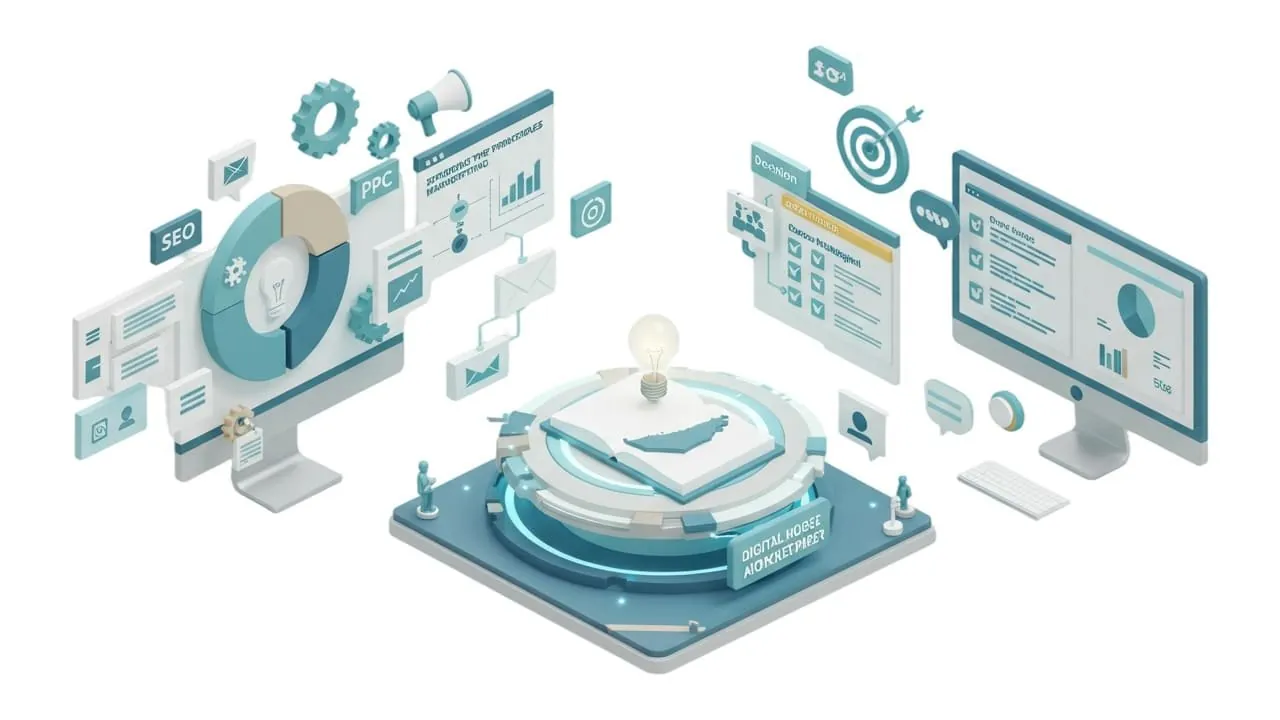
Each type can run as different campaigns, such as lead generation, awareness or seasonal offers. See campaign ideas and real results in digital marketing campaigns in Dubai. Need a partner for this? Digital House is a social media management company in Dubai.
What are the types of digital marketing campaigns?
A digital marketing campaign is a set of ads, posts or emails with one goal and a fixed time frame. Most campaigns fall into one of the types below, and the goal decides which channels and results to track.
| Campaign type | Goal | Common channels | What to measure |
|---|---|---|---|
| Awareness | Reach new people | Social media ads, video, influencers | Reach, video views, brand searches |
| Lead generation | Collect enquiries | Google Search ads, Meta lead forms, click-to-WhatsApp ads | Leads, cost per lead |
| Sales and offers | Sell products or services | Google Shopping, Meta ads, email | Orders, revenue, return on ad spend |
| Retargeting | Bring back past visitors | Display, Meta, YouTube | Return visits, conversions |
| Seasonal | Use dates such as White Friday, National Day or Ramadan | Social media, email, search ads | Sales during the period |
| Product launch | Introduce something new | Social media, influencers, email | Sign-ups, first orders |
| Engagement and loyalty | Keep customers coming back | Email, WhatsApp, social content | Repeat orders, replies |
For seasonal dates, see our social media content calendar for UAE brands.
Why digital marketing fundamentals matter
Mastering the digital marketing fundamentals is critical for several reasons:
- They provide structure: Without understanding the basics, campaigns lack focus and often fail.
- They ensure consistency: The foundations of digital marketing and e commerce align brand messaging across different channels.
- They drive adaptability: Once you know the fundamentals, it becomes easier to adapt to new technologies like AI-driven search.
- They support growth: Companies applying the fundamentals effectively enjoy better visibility, higher engagement, and stronger revenue growth.
For the full picture, see our guide to digital marketing campaigns in Dubai.
Why digital marketing matters
The importance of digital marketing in today’s world
In today’s hyper-connected digital ecosystem, reaching your audience effectively means showing up where they spend most of their time — online. Whether browsing social media, watching videos, or searching for solutions, digital touchpoints shape purchasing decisions.
Why it matters
- Global reach: Brands can engage customers across different regions and markets without geographical limitations.
- Cost efficiency: Digital campaigns are more cost-effective than traditional media, offering better returns on investment.
- Data-driven insights: Metrics like click-through rates, conversions, and bounce rates provide actionable insights.
- Personalization: Tailored campaigns based on user behavior increase engagement and relevance.
These aspects emphasize the importance of digital marketing in gaining a competitive edge and adapting to consumer expetions.
Maximize your brand’s potential with targeted Social Media Strategies designed for measurable success.
What is the difference between digital marketing and traditional marketing?
Traditional marketing uses offline channels such as print, TV, radio and billboards, while digital marketing uses online channels that can be targeted and measured in real time. The full comparison, with pros and cons, is in digital vs traditional marketing.
The role of digital marketing in brand transformation for a business
A strong digital strategy doesn’t just promote — it transforms. Digital tools help redefine a company’s image, customer experience, and market presence. Here’s how:
1. Building brand awareness
Digital campaigns reach a wide audience quickly, ensuring your brand becomes easily recognizable and trusted.
2. Improving customer experience
Digital tools enable personalized communication, faster support, and smoother user journeys.
3. Creating consistent messaging
Through content and design, businesses can deliver a consistent message across all digital platforms, reinforcing their identity.
4. Gaining competitive advantage
By leveraging real-time data and analytics, brands can make informed decisions and stay ahead of market trends.
This transformation underlines the importance of digital marketing in business as an ongoing strategy rather than a one-time campaign.
Need help turning your brand into a market leader? Let Digital House craft your digital evolution. For the full picture, see our guide to digital marketing funnel. For the full picture, see our guide to digital marketing for real estate.
Frequently asked questions
The primary goal of digital marketing is to connect with your target audience in the right place, at the right time, and through the right channels. It aims to generate awareness, drive engagement, and convert leads into loyal customers.
There is no one-size-fits-all answer. The best form of digital marketing depends on your business goals. For quick visibility, PPC and social media marketing are excellent. For long-term value, SEO and content marketing work best.
Despite the advantages of digital marketing, limitations include high competition, evolving algorithms, ad fatigue, and privacy regulations. Success requires constant learning and adaptation.
Digital marketing uses online channels to promote products and services, build brand awareness, and generate leads. By applying the fundamentals of digital marketing, companies can reach their audience through search engines, social media, email, and paid advertising—making it a powerful driver of growth in any industry.
The eight main types are SEO, content marketing, social media marketing, email marketing, paid advertising, affiliate marketing, influencer marketing, and mobile marketing. These categories cover the complete foundations of digital marketing and e commerce, offering businesses multiple ways to connect with their audiences.
Digital marketing is highly effective due to its targeted nature, data insights, and scalability. It allows brands to reach the right people at the right time with measurable results.
Despite its advantages, challenges include changing algorithms, increasing competition, data privacy laws, and evolving consumer expetions. Staying updated and agile is key.
Common objectives include increasing brand awareness, generating leads, improving conversion rates, and enhancing customer engagement. These goals highlight the importance of digital marketing as a tool for sustainable business growth.
Search (SEO and PPC), social (social media and influencers), content (content marketing, video and email) and partnerships and mobile (affiliate and app marketing).
The most common forms are SEO, paid search, social media marketing, content marketing, email marketing, influencer marketing, affiliate marketing and mobile marketing.
Elevate your brand with strategic digital moves
Whether you’re a startup or an established enterprise, understanding the types of digital marketing and how to leverage them is key to thriving in today’s marketplace. With the rise of mobile usage, AI, and content-driven engagement, the importance of digital marketing has never been greater.
By applying the right strategies at the right time, supported by expert partners like Digital House, you can position your brand for success in a highly competitive environment.
Take the next step toward your digital success — work with the region’s most trusted partner in online growth. Start your journey with Digital House now. For the full picture, see our guide to top digital marketing companies.