What is e-commerce, and how does it work? E-commerce is the buying and selling of products or services over the internet, including the payment and delivery that complete a sale. It can happen through an online store, marketplace, app, or social platform, with orders moving from product discovery to checkout and fulfilment.
Businesses choose among four models: B2C, B2B, C2C and C2B, based on who sells to whom. A store needs payments, delivery and stock management, while marketing such as SEO, Google Shopping, social ads and email helps attract buyers. In the UAE, shoppers expect fast delivery, Arabic and English options, and flexible payment choices.
E-commerce meaning: A simple definition
E-commerce (electronic commerce) means buying and selling products or services over the internet, including the online payment and delivery that complete the sale. An online store, a marketplace listing and an app that takes orders are all forms of e-commerce.
The e commerce meaning goes beyond just buying and selling products online. It encapsulates the full scope of conducting business transactions over the internet. From digital storefronts to automated checkouts, eCommerce has become a cornerstone of modern business. Whether you’re a retailer or a service provider, digital channels are now vital to your business growth and sustainability. For a closer look, read our guide to Google e-commerce.
Understanding eCommerce starts with knowing how businesses adapt their strategies to reach consumers online. The meaning of online commerce has expanded to include data analytics, personalized shopping experiences, and real-time inventory management.
To gain an edge in this landscape, businesses are turning to experts. Learn how your company can grow with professional support — Digital Marketing Company in UAE. For the full picture, see our guide to e-commerce marketing strategies.
How does the eCommerce process work from start to finish?
The eCommerce journey begins with setting up an online presence — this includes choosing the right platform, designing a website, and integrating payment gateways. After setup, businesses focus on marketing, conversion optimization, and customer service.
eCommerce explained means understanding this entire process — from product discovery to post-purchase support. The concept of eCommerce is inherently tied to seamless automation and user satisfaction.
The operational flow of eCommerce requires a balance of tech and strategy. From managing inventory to executing digital campaigns, success depends on integration. Need support building your online store? Check out our Web Design Development services today. For the full picture, see our guide to multichannel e-commerce.
Where does eCommerce happen, and how is it carried out?
eCommerce doesn’t happen in just one place. It spans websites, apps, social platforms, and marketplaces like Amazon. The e commerce meaning now includes mobile commerce, voice commerce, and even commerce within virtual environments.
What eCommerce means today is accessibility — customers can shop 24/7 across multiple devices. For businesses, this also means setting up systems that work across all digital touchpoints.
The rise of global commerce platforms means businesses can reach international audiences like never before. If you’re expanding globally or locally, start by enhancing your digital presence. Get in touch with the best digital marketing agency in Dubai for expert guidance.
For the full picture, see our guide to e-commerce for beginners.
What are the main types of eCommerce models?
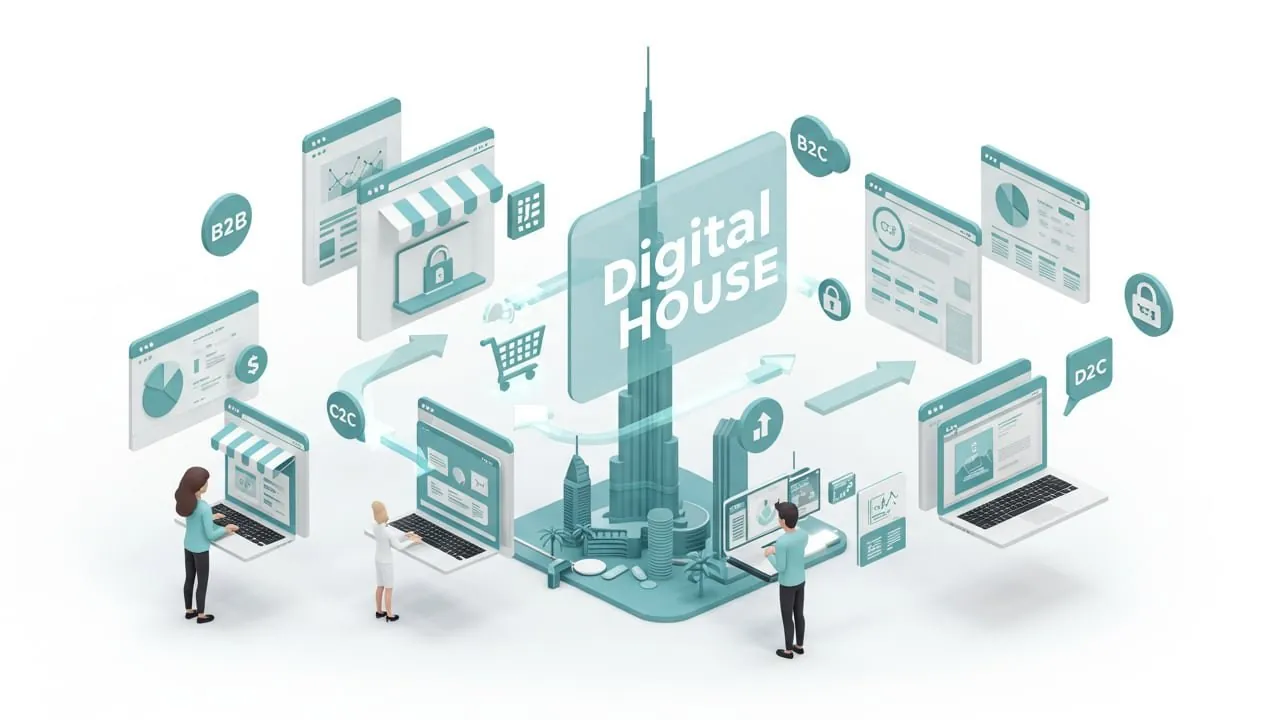
There are four core eCommerce models:
- B2C (business to consumer) – Most common; direct sales from businesses to consumers.
- B2B (business to business) – Companies sell to other companies.
- C2C (consumer to consumer) – Peer-to-peer platforms like eBay.
- C2B (consumer to business) – Freelancers or influencers selling services to brands.
Each model represents a different side of the Concept of eCommerce. The meaning of online commerce changes slightly with each, depending on user behavior, product types, and transaction scales.
Choosing the right model for your business depends on your target market and offerings. Optimize your content and product strategy with a trusted Content writing agency.
E-commerce development: What it means
E-commerce development is the work of building and running the online store itself: choosing the platform (Shopify, WooCommerce or a custom build), designing product and checkout pages, connecting payment gateways and delivery, and setting up stock and order management. See our e-commerce website development service.
E-commerce and digital marketing
An online store needs traffic to sell. E-commerce digital marketing brings that traffic through SEO, Google Shopping and social ads, email and influencers, then turns visitors into buyers with better product pages and retargeting. Our guide to e-commerce marketing strategies covers each channel.
E-commerce in the UAE
UAE shoppers buy from brand websites, marketplaces such as Amazon.ae and Noon, and increasingly through Instagram and TikTok. They expect fast delivery, Arabic and English options, and flexible payment: cards, Apple Pay, cash on delivery and buy-now-pay-later services such as Tabby and Tamara.
What defines an eCommerce website?
A successful eCommerce website includes several key elements: responsive design, secure checkout, clear navigation, and compelling product pages. More than just a virtual storefront, it is an interactive platform tailored to the user experience.
eCommerce explained here means focusing on user-centric design and functionality. The site should load quickly, be mobile-optimized, and reflect the brand’s identity. The e commerce meaning in this context is about performance and accessibility.
The most effective websites balance technical SEO, intuitive UX, and strategic layout. Need help building one? Leverage expert support with our Search Engine Optimization (SEO) solutions.
How do we describe an eCommerce business?
An eCommerce business is any enterprise that facilitates buying and selling online. This can range from small startups selling handmade goods to global corporations offering thousands of SKUs.
The concept of eCommerce includes not just the storefront but the backend systems — like CRMs, analytics tools, and supply chain software. The meaning of online commerce has expanded to include data-driven strategies, personalization, and customer lifetime value.
Whether you’re a product-based brand or service provider, you can benefit from digital channels. Drive growth through targeted campaigns with our Social Media Marketing and Management.
What are the key steps to launching an eCommerce business?
Launching takes five steps: validate the product, choose a platform, set up payments and delivery, list your products and start marketing. Each step is explained in our guide to e-commerce for beginners.
What are the main advantages and disadvantages of eCommerce?
Advantages:
- Lower operational costs
- 24/7 availability
- Global customer reach
- Automated marketing and fulfillment
Disadvantages:
- High competition
- Security concerns
- Tech maintenance
- Shipping logistics
Understanding eCommerce involves weighing both sides. While the meaning of online commerce brings convenience and scalability, it also comes with unique operational demands.
Knowing these challenges can help businesses prepare better. Drive traffic and increase sales with smart targeting via Pay Per Click (PPC) advertising.
What challenges do businesses face in eCommerce?
eCommerce presents unique hurdles such as:
- Cart abandonment
- Customer trust and security
- Platform dependency
- Return and refund complexities
What eCommerce means is more than just selling — it’s about building trust. The concept of eCommerce challenges businesses to meet rising consumer expectations, especially in areas like site speed, personalization, and privacy.
To overcome these hurdles, many businesses rely on digital tools and analytics. Get tailored insights and strategies from a reliable PPC Agency Dubai.
How can a business succeed in eCommerce?
Success in eCommerce comes down to a few critical areas:
- Strong branding and user experience
- Data-driven marketing
- Mobile and SEO optimization
- Continuous testing and improvement
eCommerce explained here means not only knowing what to do but how to do it effectively. The e commerce meaning today includes agility — the ability to pivot based on analytics and market feedback.
To achieve long-term success, businesses must invest in continuous learning and advanced digital tools. Start scaling your growth with expert SEO Services in Dubai.
eCommerce websites vs. traditional websites – what’s the difference?
Not all websites are created equal. A traditional website may serve as an online brochure or a portfolio. But an eCommerce website is a fully interactive selling platform.
Key differences:
| Feature | Traditional website | eCommerce website |
|---|---|---|
| Purpose | Information/Branding | Selling products or services |
| Functionality | Static content | Dynamic, transactional |
| User experience | Browsing-focused | Purchase-focused |
| Core features | About, contact, blog | Shopping cart, checkout, CRM |
| Marketing integration | Limited | SEO, PPC, email, retargeting |
The best digital marketing agency in Dubai will always recommend building a site based on your business model. If you’re selling online, you need features tailored for online retail and V-commerce.
Explore our Web Design Development solutions built for eCommerce success. For expert help, see our e-commerce website development.
Which eCommerce website examples stand out the most?
Some brands have revolutionized digital commerce with user-centric design, flawless functionality, and smart marketing. Here are a few outstanding examples:
1. Amazon – the king of convenience
Amazon turned internet commerce into a customer-first experience. With fast delivery, personalized recommendations, and trusted payments, it’s a masterclass in scalability and convenience.
2. Shopify – empowering small businesses
Shopify isn’t just a platform—it’s a movement. With beautiful templates and plug-and-play tools, it’s helping small businesses thrive in the e-marketplace.
3. Zara – fast fashion meets fast UX
Zara’s site mirrors its in-store vibe—clean, classy, and ultra-responsive. Its integration with social commerce and mobile-first design is a great example of virtual commerce done right.
4. Apple – premium experience online
Apple’s online store feels like its physical ones—minimalist, premium, and intuitive. It shows how an e-business can carry brand value online.
5. Warby Parker – innovation in every click
From AR-powered try-ons to seamless checkout, Warby Parker’s site proves how digital innovation can create immersive online retail experiences.
Partner with the Digital Marketing Company in UAE to build your web presence.
Why are eCommerce websites essential when starting a business?
Launching a new business without an eCommerce website in 2026 is like opening a shop with the lights off.
Here’s why web eCommerce should be your first step:
- Low startup cost: No rent, no store fittings. Just a domain and digital tools.
- Global reach: Sell to anyone, anywhere, 24/7.
- Customer insights: Track every click, view, and purchase for better decisions.
- Marketing synergy: Integrate with SEO, email, and paid social media advertising.
- Scalability: Start small, scale fast with automation and analytics.
Your eCommerce site is your digital storefront—and the starting point of brand trust.
Launch your vision with the best digital marketing agency in Dubai.
Frequently asked questions
eCommerce has evolved from a simple digital storefront to a robust ecosystem that encompasses logistics, analytics, marketing, customer service, and personalization. It’s more than just online transactions — it’s how modern commerce operates. Businesses embracing this change will be at the forefront of global innovation.
A simple website becomes a sales powerhouse when it’s:
- Built with UX and performance in mind
- Optimized for search using expert SEO Services in Dubai
- Fueled by targeted traffic from Pay Per Click (PPC) advertising
- Powered by automation, CRM, and analytics tools
- Integrated with marketing platforms like social media and email
With a clear strategy and the right tech stack, your site doesn’t just represent your brand—it becomes your main revenue driver.
E-commerce is buying and selling online. The customer chooses a product, pays over the internet, and the order is delivered or provided digitally.
B2C (business to consumer), B2B (business to business), C2C (consumer to consumer, such as marketplaces) and C2B (consumer to business, such as freelancers selling services to companies).
It is building the online store: the platform, product and checkout pages, payment and delivery integrations, and the systems that manage stock and orders.
Discover the difference with the right team — Digital House is here to elevate your brand.
The future of business is eCommerce
So, what eCommerce means for businesses isn’t just about having an online store — it’s about adopting a whole new way of operating. As understanding eCommerce continues to evolve, companies that invest in their digital capabilities are the ones that will lead.
With the e commerce meaning now firmly embedded in daily consumer habits, businesses must innovate or risk falling behind. Embracing the concept of eCommerce is no longer optional — it’s a prerequisite for growth.
To fully capitalize on this transformation, your business needs a strategy aligned with digital behavior and emerging trends. Start today — paid social media advertising can help you connect with customers faster. For the full picture, see our guide to e-commerce business.